Buying Guide: Which Resistance Bands Are Best for Discreet Office Stretching?
Health Enthusiast: A Holistic Guide and History of Healthy Living Welcome to Health Enthusiast, your trusted portal for exploring the roots of medical history and finding the best healthy lifestyle tips. Through https://www.ratirossie.cfd/, we bridge insights into the history of human health with the most up-to-date information on healthy living tips. Discover the origins of various nutritional diet guidelines, learn about the evolution of exercise routines over time, and understand proven methods for maintaining mental and physical health. Make this platform your daily partner in achieving a better and more balanced quality of life holistically. Thank you and happy reading.
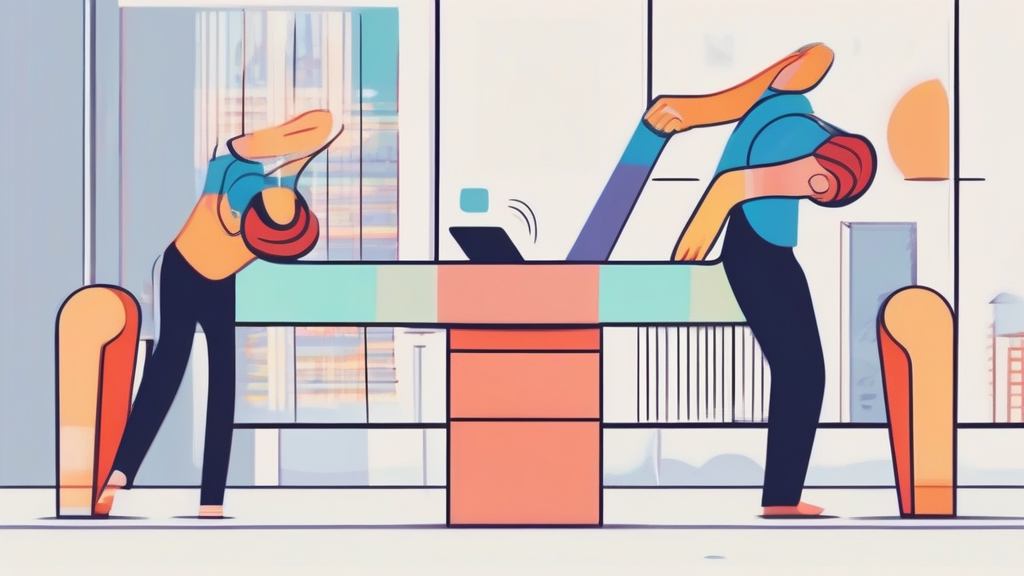
I remember the first time I realized my desk chair was slowly becoming my worst enemy. By 3:00 PM, my shoulders felt like they were fused to my ears, and my lower back was screaming for relief. If you spend your day glued to a monitor, you know exactly what I mean. Finding the right tools for a quick reset is essential, which is why I put together this A Guide to Light Stretching at the Office to Reduce Aches and Pains.
You don't need a full gym setup to stay mobile. In fact, the most effective tools are often the ones you can hide in a desk drawer. Resistance bands have become my go-to secret weapon for staying limber between Zoom calls. They are silent, lightweight, and incredibly versatile for anyone looking to incorporate movement into a sedentary workday.
Choosing the Right Resistance Bands for Office Use
Not all bands are created equal, especially when you are trying to remain discreet. If you are sitting in an open-plan office, you probably don't want a massive, neon-colored powerlifting band snapping against your cubicle wall. You want something low-profile, high-quality, and easy to manage.
Material and Durability Considerations
When selecting your gear, focus on the elasticity of the material. Most office-friendly bands are made from either latex or thermoplastic elastomers (TPE). Latex bands offer a smoother stretch, but if you have a latex allergy, TPE is your best friend.
Look for fabric-covered bands if you want to avoid the "snap" factor. There is nothing more embarrassing than a rubber band slipping and hitting your monitor or, worse, a coworker. Fabric bands provide a consistent tension that feels more like a controlled pull, which is perfect for subtle movements.
Resistance Levels for Targeted Relief
You aren't trying to build massive biceps during a conference call. Your goal is to improve flexibility and blood flow. Stick to "light" or "extra-light" resistance levels. These allow you to perform fluid motions without breaking a sweat or looking like you are struggling with a heavy weight.
Think of these bands as an extension of your stretching routine. They should provide just enough feedback to help you engage your muscles, not enough to turn your office into a weight room. I personally prefer flat, looped bands because they can be easily manipulated without requiring handles that might clatter against your desk.
A Guide to Light Stretching at the Office to Reduce Aches and Pains
Integrating movement into your workflow doesn't have to be a production. The key is consistency. Five minutes every two hours is infinitely better than an hour of intense exercise once a week. Here is how I use my bands to keep the stiffness at bay.
The Seated Chest Opener
Slumping over a keyboard causes the chest muscles to tighten, which pulls the shoulders forward. To counteract this, I hold a light band in front of me with straight arms. Slowly pull the band apart while keeping your shoulders down, focusing on squeezing your shoulder blades together.
Do this for ten repetitions. It is subtle enough that if someone walks by, it just looks like you are checking a document. This simple motion forces your posture to correct itself, instantly alleviating that mid-back tension that creeps in by mid-afternoon.
Overhead Shoulder Mobility
When the neck starts to ache, the culprit is often frozen shoulders. I grab my band with both hands, arms overhead, and gently pull outward while moving the band behind my head and back to the front. This motion is incredible for loosening up the rotator cuff.
If you have limited space, just keeping your arms overhead and doing small "pulses" outward with the band works wonders. It wakes up the upper back muscles and reminds your body to sit upright. I try to do this whenever I feel myself starting to lean toward the screen like a vulture.
Lateral Side Stretches
Side body tightness is a silent killer of productivity. Anchor the band under one hip while sitting in your chair. Hold the other end with your opposite hand, reach overhead, and gently lean to the side. The resistance of the band helps deepen the stretch along your obliques and lats.
This is a great move to do while on "listen-only" mode during a webinar. It requires very little movement, but the relief it provides to the lower back is immediate. It’s all about finding those tiny windows of opportunity throughout the day.
Why Resistance Bands Beat Traditional Weights
I have tried keeping dumbbells under my desk, but they are clunky and loud. Dropping a weight on the floor is a quick way to lose your professional composure. Resistance bands offer a much more elegant solution for the modern worker.
- Portability: You can fit an entire set in a laptop bag or a small drawer.
- Silence: No clanking metal to distract you or your team.
- Safety: There is almost zero risk of injury compared to free weights.
- Versatility: They allow for dynamic movements that mimic real-life reaching and pulling.
The beauty of these bands lies in their simplicity. Because they weigh next to nothing, you can bring them on business trips or move them between your home office and your corporate workspace. They adapt to your environment, not the other way around.
Addressing Common Concerns About Office Stretching
Some people worry that stretching in the office looks unprofessional. I used to feel the same way. However, I realized that taking care of my physical health actually makes me more productive and less irritable during meetings.
How to Keep It Discreet
The trick is to keep your movements controlled and small. You don't need to do full-range-of-motion lunges in the middle of the hallway. Focus on isometric holds or small, deliberate pulses. If someone asks what you are doing, just be honest: "I’m just working on my posture so I don't turn into a pretzel by 5:00 PM."
Most of the time, people are actually envious of your proactive approach to health. You might even find that your coworkers start asking to borrow your bands. It creates a culture of wellness rather than one of burnout.
Frequency and Timing
Don't wait until you are in pain to start stretching. By the time you feel a knot in your shoulder, it is already too late. I set a recurring reminder on my calendar for every two hours. It’s a gentle nudge to stand up, grab the band, and perform two or three simple exercises.
If you have a standing desk, you are already ahead of the game. Using a resistance band while standing allows for a wider range of motion, especially for leg and glute activation. Just be mindful of your surroundings and keep the movements contained to your immediate area.
Building Your Personal Office Wellness Kit
If you want to get serious about your desk ergonomics, start small. You don't need the most expensive equipment on the market. A simple, high-quality loop band will suffice for 90% of your needs. I recommend keeping a few different resistance levels in a small pouch.
Start with the lightest band and see how your body responds. As you get more comfortable with the movements, you can introduce a slightly thicker band for more support. The goal is to create a habit, not to max out your strength. If the band feels too heavy, you are doing it wrong—your form will suffer, and you won't get the relief you are looking for.
Consider the aesthetic of your workspace as well. If you have a clean, minimalist desk, a bright red or blue band might look out of place. Many manufacturers now offer neutral colors like black, gray, or tan that blend in seamlessly with office furniture. It sounds trivial, but keeping your space looking professional helps you stay focused on the task at hand.
The Long-Term Benefits of Consistent Movement
I’ve been using this approach for over three years now, and the difference in my physical comfort is night and day. I no longer finish my work week feeling like I need a week of physical therapy. By making small, consistent adjustments, I have managed to protect my joints and improve my overall posture.
The cumulative effect of these tiny stretches is profound. It’s not just about the relief you feel in the moment; it’s about preventing chronic issues down the road. We are designed to move, and when we deny our bodies that movement, they eventually protest. Resistance bands are the perfect bridge between a sedentary job and a healthy, active lifestyle.
Next time you feel that familiar ache in your neck or the tension in your lower back, don't just reach for another cup of coffee. Grab your resistance band and take three minutes to reset. Your body will thank you, and you will likely find that your focus improves along with your comfort. It is a small investment of time that pays massive dividends in your overall well-being. Start today, keep it simple, and watch how much better your workday becomes.
You should leave a comment for me to be more enthusiastic in writing articles and Google will like my beautiful and pretty website.
Post a Comment for "Buying Guide: Which Resistance Bands Are Best for Discreet Office Stretching?"