Deep Tissue Self-Massage Techniques for Office-Induced Tension Headaches
Health Enthusiast: A Holistic Guide and History of Healthy Living Welcome to Health Enthusiast, your trusted portal for exploring the roots of medical history and finding the best healthy lifestyle tips. Through https://www.ratirossie.cfd/, we bridge insights into the history of human health with the most up-to-date information on healthy living tips. Discover the origins of various nutritional diet guidelines, learn about the evolution of exercise routines over time, and understand proven methods for maintaining mental and physical health. Make this platform your daily partner in achieving a better and more balanced quality of life holistically. Thank you and happy reading.
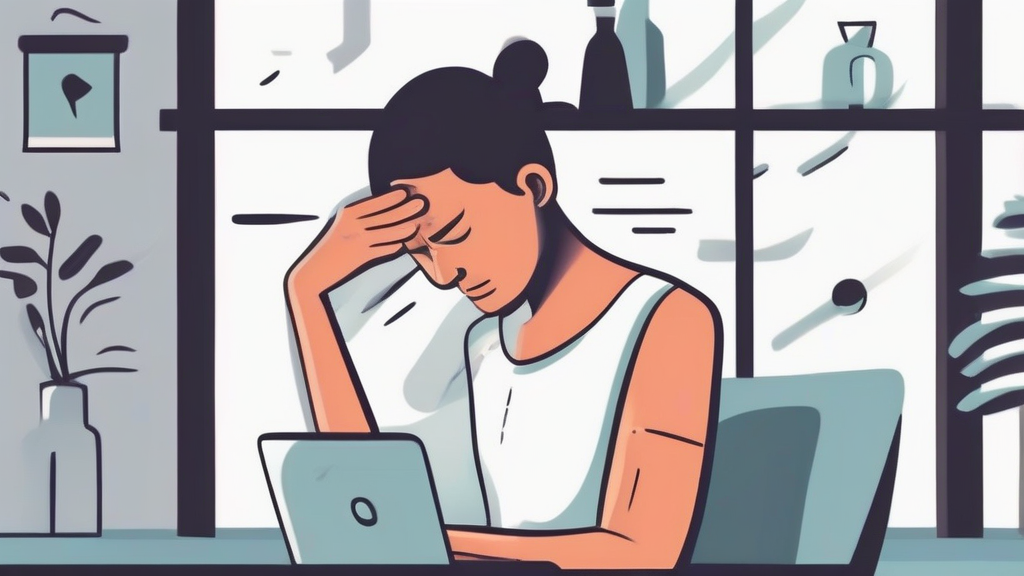
You know that feeling. It’s 3:00 PM, your screen is blurring, and a familiar, tightening band of pressure starts gripping your temples. That’s not just a busy day; that’s an office-induced tension headache, and frankly, I’ve been there more times than I care to admit.
Most of us spend hours hunched over keyboards, our posture slowly morphing into a question mark. When your neck muscles lock up, your head pays the price. Luckily, you don't need a professional therapist on speed dial to find relief. Sometimes, all you need is a quick break and a guide to light stretching at the office to reduce aches and pains.
The Anatomy of Your Office Headache
Why do these headaches keep coming back? It usually boils down to muscle tonus. When we stare at monitors for extended periods, our upper traps and neck muscles stay in a state of constant, low-level contraction.
Think of your head like a bowling ball balanced on a stick. If you lean that stick forward, the muscles in the back of your neck have to work overtime to keep the ball from falling. That constant strain eventually triggers a tension headache.
It’s not just about the muscles, though. It’s about how we hold our breath, how we grip our mice, and how we ignore our body's signals until it's too late. If you want to stop the cycle, you have to intervene before the pain reaches a level ten.
Deep Tissue Self-Massage Techniques for Office-Induced Tension Headaches
You don't need fancy equipment to perform deep tissue work. Your own hands are incredibly powerful tools. The goal here is to release the trigger points—those nasty little knots that radiate pain into your head.
Finding the Suboccipital Release Points
The suboccipital muscles sit right at the base of your skull. These are the primary culprits for most tension headaches. When you feel that tightness where your neck meets your head, you’ve found them.
- Interlace your fingers and place them at the base of your skull.
- Use your thumbs to apply firm, steady pressure to the soft tissue just below the bony ridge.
- Slowly tilt your head back into your hands, letting the weight of your head do the work.
- Hold for 30 seconds while taking slow, deep breaths.
Don't press on the bone itself. You want to sink into the muscle belly. If you feel a "good hurt" or a dull ache, you’re in the right spot. Just breathe through it.
Releasing the Upper Trapezius
Your traps are the big, triangular muscles that run from your neck to your shoulders. If you’ve spent the day typing, they are likely screaming. To release them, you need to use a cross-fiber friction technique.
Take your right hand and reach across to your left shoulder. Find the thickest part of the muscle—usually where the shoulder meets the neck. Pinch the muscle firmly and move your hand back and forth, perpendicular to the muscle fibers. Switch sides after about a minute.
A Guide to Light Stretching at the Office to Reduce Aches and Pains
Once you’ve loosened the knots, it’s time to lengthen the tissues. Stretching helps reset the muscle length and improves blood flow to the area. Remember, the goal is gentle tension, not sharp pain.
The Neck Lateral Flexion Stretch
This stretch targets the levator scapulae and the side of the neck. It’s simple, effective, and you can do it without looking like you’re doing yoga in the breakroom.
- Sit upright with your shoulders relaxed and down.
- Slowly drop your right ear toward your right shoulder.
- For a deeper stretch, gently place your right hand on your head—don't pull, just let the weight of your hand provide a slight assist.
- Reach your left arm toward the floor to deepen the sensation along the side of your neck.
- Hold for 20 seconds, then switch sides.
The Chin Tuck for Posture Correction
This is arguably the most important move for anyone who spends their life at a desk. It counters the "forward head posture" that causes so much grief. Posture is everything when it comes to long-term pain prevention.
Sit tall. Without tilting your head up or down, pull your chin straight back as if you’re trying to make a double chin. You should feel a stretch in the back of your neck. Hold for five seconds, then release. Do this ten times. It looks a bit silly, but your neck will thank you.
Integrating Movement into Your Workflow
If you wait until you have a headache to stretch, you’re already behind. You need to build these habits into your daily rhythm. I like to use the "Pomodoro" method to remind myself to move.
Every 25 minutes, I stand up. I do a quick shoulder roll. I do one set of chin tucks. It takes less than a minute, but it prevents the buildup of tension that leads to those afternoon migraines.
Creating an Ergonomic Environment
No amount of stretching will fix a bad setup. If your monitor is too low, you will always have neck pain. If your chair doesn't support your lumbar spine, your upper back will compensate.
Check your monitor height. The top third of your screen should be at eye level. If you’re using a laptop, get an external keyboard and a stand. Your body isn't designed to be a laptop stand.
Hydration and Its Role in Tension
Did you know that dehydration is a leading cause of headaches? When you’re focused on a project, it’s easy to forget to drink water. Keep a bottle on your desk. If your urine is dark, you’re already dehydrated. Drink a glass before you reach for the aspirin.
Addressing Chronic Issues
If you find that these self-massage techniques and stretches aren't touching the pain, there might be something else going on. Sometimes, tension headaches are a symptom of something deeper, like jaw clenching or vision issues.
If you notice you’re clenching your teeth while you work, try to consciously drop your jaw. Let your tongue rest on the floor of your mouth. A tight jaw is a fast track to a tension headache.
Also, consider an eye exam. If your prescription is outdated, you might be squinting without realizing it. That constant eye strain can manifest as a persistent ache behind the eyes and across the forehead.
Building a Routine That Actually Sticks
Habit formation is the hardest part. You’ll be motivated to stretch for three days, and then the chaos of work will take over. I’ve found that anchoring these stretches to existing habits works best.
Do your chin tucks while your coffee is brewing. Do your suboccipital release while you’re waiting for a file to upload. If you tie the movement to a task you already do, you don’t have to "find time" for it.
Consistency beats intensity every single time. Five minutes of light stretching every day is infinitely better than an hour-long, painful massage once a month. You are the architect of your own physical comfort.
Final Thoughts on Workplace Wellness
You have more control over your physical well-being than you might realize. Those tension headaches aren't an inevitable part of office life. They are signals from your body asking for a change in how you sit, how you move, and how you manage your stress.
Start small. Pick one stretch from this guide and commit to doing it three times a day for a week. Notice how your neck feels. Notice if the afternoon fog lifts. You’ll be surprised at how much a little intentional movement can change your entire workday.
Take charge of your desk ergonomics today. Your future self—the one without the pounding headache at 3:00 PM—will be incredibly grateful. If you found these techniques helpful, share this guide with a coworker who’s always complaining about their neck. We’re all in this together.
You should leave a comment for me to be more enthusiastic in writing articles and Google will like my beautiful and pretty website.
Post a Comment for "Deep Tissue Self-Massage Techniques for Office-Induced Tension Headaches"