How to Convince Your Boss to Implement a Corporate Wellness Movement Program
Health Enthusiast: A Holistic Guide and History of Healthy Living Welcome to Health Enthusiast, your trusted portal for exploring the roots of medical history and finding the best healthy lifestyle tips. Through https://www.ratirossie.cfd/, we bridge insights into the history of human health with the most up-to-date information on healthy living tips. Discover the origins of various nutritional diet guidelines, learn about the evolution of exercise routines over time, and understand proven methods for maintaining mental and physical health. Make this platform your daily partner in achieving a better and more balanced quality of life holistically. Thank you and happy reading.
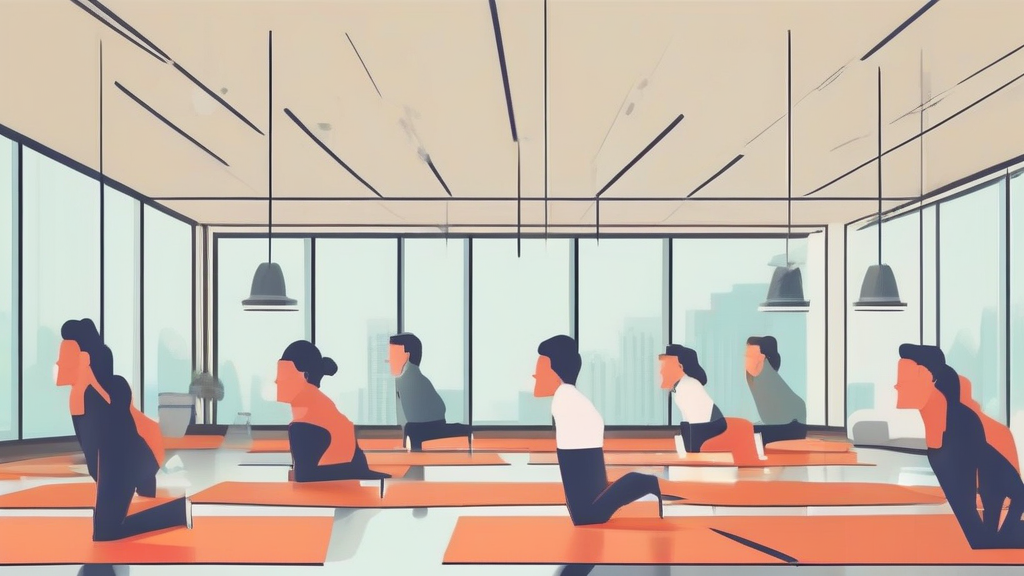
I remember sitting at my desk three years ago, staring at a spreadsheet while my lower back screamed in protest. My shoulders were hunched up toward my ears, and my neck felt like it had been replaced by a rusted hinge. I wasn't alone; everyone around me was wincing, rubbing their wrists, or adjusting their chairs every ten minutes. We were a team of high performers living in bodies that were essentially shutting down from static posture.
That was the day I realized that productivity isn't just about software updates or better coffee. It’s about the physical vessel we inhabit for eight hours a day. If you are feeling the same strain, you need a strategy to get management on board. Implementing a guide to light stretching at the office to reduce aches and pains is not just a perk; it is a business imperative that pays dividends in morale and output.
Building the Business Case for Movement
When you walk into your boss’s office, don't lead with "I want to stretch." They are thinking about quarterly goals and bottom-line impact. Instead, frame your proposal around occupational health and the reduction of absenteeism. When employees are in constant pain, their focus evaporates, and their output slows to a crawl.
Present the idea as a low-cost, high-reward initiative. You aren't asking for a gym build-out or expensive equipment. You are asking for a culture shift that prioritizes human capital. Use data to show that sedentary behavior is a silent drain on company resources. When we ignore the physical toll of office work, we invite long-term health issues that lead to turnover and medical leave.
The ROI of Physical Well-being
Management cares about numbers. Show them that a healthy team is a faster team. When you integrate a guide to light stretching at the office to reduce aches and pains, you are effectively reducing the physical fatigue that hits around 3:00 PM. That post-lunch slump isn't just about digestion; it’s about blood pooling in the legs and stiffening joints.
Stretching improves circulatory system function, which brings more oxygen to the brain. More oxygen equals better problem-solving. By encouraging short, scheduled movement breaks, you are essentially "rebooting" the team’s mental capacity. Frame this as an energy management strategy rather than a fitness program.
How to Start the Conversation
Don't ambush your supervisor. Schedule a brief meeting and come prepared with a plan. Start by acknowledging the shared struggle. "I've noticed that our team is often dealing with back and neck pain by the end of the day, and I’ve been looking into ways we can mitigate that to keep our performance high."
Keep your pitch simple. Propose a "pilot week" where the team commits to five minutes of guided stretching twice a day. If they see that the work still gets done—and perhaps gets done better—they will be much more likely to support a permanent program. Emphasize that this is voluntary and non-disruptive.
Addressing Common Objections
Your boss might worry that stretching looks like "goofing off." Counter this immediately. Explain that these movements are functional, not recreational. They are designed to prevent injuries that would otherwise keep people away from their desks for days at a time.
- "We don't have the time." Remind them that five minutes of stretching prevents an hour of lost focus caused by discomfort.
- "Is it a liability?" Suggest starting with low-impact, seated stretches that require no special equipment or complex movements.
- "People won't participate." Offer to lead the first few sessions to build momentum and show how easy it is to integrate.
Implementing a Guide to Light Stretching at the Office to Reduce Aches and Pains
Once you get the green light, you need a structured approach. A random flurry of movements won't be effective. You need a routine that targets the specific areas affected by desk work: the neck, the shoulders, the wrists, and the lower back. Keep it simple enough that anyone can do it in business casual attire.
Consistency is more important than intensity. Encourage the team to set a calendar alert for 10:00 AM and 2:30 PM. These are the moments when physical tension is usually at its peak. Use a shared digital document to keep everyone accountable and provide visual aids for the stretches.
Simple Movements for Maximum Impact
Here are a few staples you can include in your program:
- The Neck Release: Gently tilt your head toward your shoulder, holding for 15 seconds on each side. This relieves the tension from staring at monitors.
- Seated Spinal Twist: While sitting, rotate your torso toward the back of your chair. This helps release the stiffness that accumulates in the lower back after hours of sitting.
- Wrist Extensions: Extend your arm forward, palm up, and use your other hand to gently pull your fingers back. This is critical for anyone typing all day.
- Chest Openers: Clasp your hands behind your back and pull your shoulders down and back. This counteracts the "slouch" that happens when we lean toward our keyboards.
Creating a Sustainable Wellness Culture
Getting the program started is only half the battle. Keeping it alive requires a bit of social engineering. If you are the only one stretching, it feels awkward. If the manager joins in, it becomes a team ritual. Ask your boss to participate or at least give a nod of approval during team meetings.
Make it fun. Maybe there’s a small reward for the team that hits their stretching goals for the month. Or, perhaps you can rotate the "stretch leader" role so that different team members feel a sense of ownership over the program. When it becomes part of the office DNA, it stops feeling like a chore and starts feeling like a relief.
Overcoming the "Desk Potato" Mentality
We are conditioned to think that staying seated is the only way to prove we are working hard. This is a relic of an older era of office management. True productivity is about output, not just hours spent in a chair. If you can show your boss that your team is more alert, more creative, and less prone to burnout, you have won the argument.
Be the advocate for your own health. If you don't speak up, nothing changes. The aches and pains you feel today are just the beginning if you don't take action. By championing a culture of movement, you are doing a service to your colleagues and proving that you have the leadership qualities to look beyond the immediate task list.
Final Thoughts on Workplace Wellness
You have the power to change your environment. Start small, be persistent, and keep the focus on performance. A guide to light stretching at the office to reduce aches and pains is a simple, effective tool that bridges the gap between physical health and professional success. Don't wait for a company-wide initiative to fall from the sky; take the initiative yourself.
Your back, your neck, and your team will thank you. When you prioritize the physical well-being of the people in the room, you create a stronger, more resilient organization. Go ahead and schedule that meeting with your boss. You’ve got the plan, you’ve got the reasoning, and you’ve got the solution. It’s time to get moving.
You should leave a comment for me to be more enthusiastic in writing articles and Google will like my beautiful and pretty website.
Post a Comment for "How to Convince Your Boss to Implement a Corporate Wellness Movement Program"