How to Properly Set Up Your Dual Monitor Workstation for Eye Comfort
Health Enthusiast: A Holistic Guide and History of Healthy Living Welcome to Health Enthusiast, your trusted portal for exploring the roots of medical history and finding the best healthy lifestyle tips. Through https://www.ratirossie.cfd/, we bridge insights into the history of human health with the most up-to-date information on healthy living tips. Discover the origins of various nutritional diet guidelines, learn about the evolution of exercise routines over time, and understand proven methods for maintaining mental and physical health. Make this platform your daily partner in achieving a better and more balanced quality of life holistically. Thank you and happy reading.
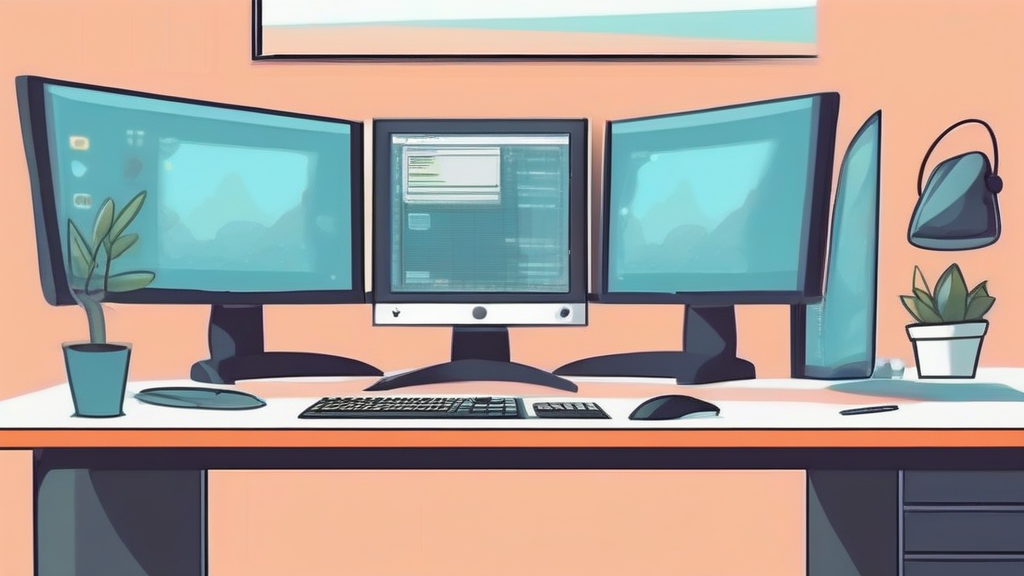
Getting your ergonomic workstation setup for eyes right isn't just about aesthetics; it is about preventing the slow-burn eye fatigue that ruins your productivity by 3 PM. I’ve spent fifteen years watching bright, talented people torch their retinas because they treated their desks like a cockpit rather than a workspace.
Key Insights
- Distance is your primary defense: keep screens at least an arm's length away.
- Alignment matters: your eyes should naturally rest on the top third of the monitor.
- Lighting balance: eliminate glare by controlling ambient light sources.
- The 20-20-20 rule: a non-negotiable habit for visual health.
Think of your eyes like camera lenses. If you leave them focused on a fixed point just two feet away for eight hours, the muscles lock up. You need to reset the focus.
Start by clearing your desk. Most people crowd their vision with too much junk. A clean field of view is the first step toward a proper ergonomic workstation setup for eyes.
Mastering Monitor Placement and Geometry
Position your primary monitor directly in front of you. The secondary monitor should sit at a slight angle, forming a gentle arc that matches your natural peripheral vision. If you have to twist your neck, you’ve gone too far.
The top of your screen must sit at or just below your eye level. When you look at the center of the screen, your eyelids should naturally cover a larger portion of the eyeball. This prevents dry eye syndrome by reducing the surface area exposed to air.
Fine-Tuning Your Ergonomic Workstation Setup for Eyes
Monitor height is only half the battle. You also need to account for depth. Aim for an arm's length distance between your face and the glass. If you find yourself leaning in to read text, increase your font size instead of sacrificing your posture.
| Feature | Optimal Setting | Why it Matters |
|---|---|---|
| Viewing Distance | 20–28 inches | Reduces ciliary muscle strain |
| Screen Height | Top 1/3 at eye level | Minimizes downward gaze angle |
| Screen Angle | 10-20 degree tilt | Reduces glare and reflections |
Use a monitor arm if your current stand doesn't offer vertical adjustment. These tools are cheap insurance for your neck and visual clarity. Do not rely on stacks of books or old printer boxes; stability is key.
Managing Light and Contrast
Glare is the silent killer of focus. If you have a window behind your monitors, you are working against the sun. Move your desk so windows are to your side, or invest in blackout curtains to kill those distracting reflections.
Adjust your monitor brightness to match the ambient light in the room. A monitor that glows like a beacon in a dark room forces your pupils to work overtime. Use a bias light strip behind your monitors to soften the contrast between the screen and the wall.
Finally, implement the 20-20-20 rule. Every 20 minutes, look at something 20 feet away for 20 seconds. It sounds simple. It is the most effective habit you will ever adopt.
How can I tell if my monitor is too bright?
If your screen looks like a light source rather than a piece of paper, turn it down. The screen should match the brightness of your surroundings so your eyes don't have to adjust constantly.
Is a curved monitor better for eye comfort?
Curved monitors help maintain a consistent focal distance across your entire field of view. They are excellent for dual-monitor users who want to reduce the "flat-plane" distortion that forces the eye to refocus when moving from the center to the edges.
What is the 30/30 rule in ergonomics?
While the 20-20-20 rule is the gold standard, the 30/30 rule suggests taking a 30-second break every 30 minutes to stand up and move. Movement promotes blood flow, which indirectly keeps the tiny muscles around your eyes from becoming stagnant.
Your setup is a living thing. Adjust it, tweak it, and listen to what your body tells you. If your eyes feel gritty at the end of the day, you haven't finished the job. Go back, check the distances, and give your vision the respect it deserves.
You should leave a comment for me to be more enthusiastic in writing articles and Google will like my beautiful and pretty website.
Post a Comment for "How to Properly Set Up Your Dual Monitor Workstation for Eye Comfort"