A Complete Guide to Light Stretching at the Office to Reduce Aches and Pains
Health Enthusiast: A Holistic Guide and History of Healthy Living Welcome to Health Enthusiast, your trusted portal for exploring the roots of medical history and finding the best healthy lifestyle tips. Through https://www.ratirossie.cfd/, we bridge insights into the history of human health with the most up-to-date information on healthy living tips. Discover the origins of various nutritional diet guidelines, learn about the evolution of exercise routines over time, and understand proven methods for maintaining mental and physical health. Make this platform your daily partner in achieving a better and more balanced quality of life holistically. Thank you and happy reading.
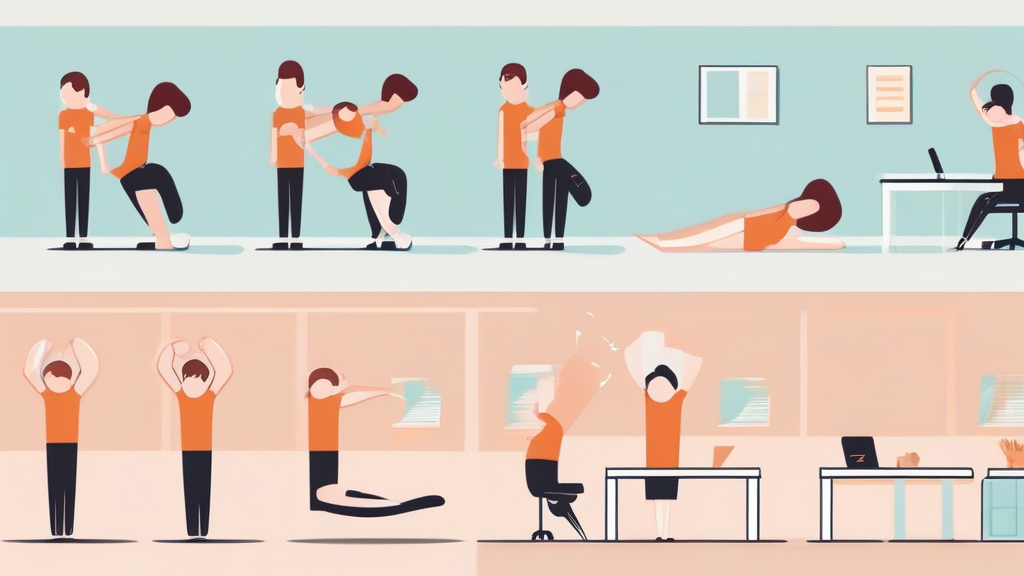
I’ve spent years hunched over a keyboard, watching my shoulders slowly migrate toward my ears. If you’ve ever finished a workday feeling like a human pretzel—stiff, sore, and desperate for a massage—you aren't alone. That is exactly why I put together a guide to light stretching at the office to reduce aches and pains that you can actually stick to.
Sitting for eight hours a day isn't just boring; it’s physically taxing. Our bodies were designed to move, hunt, and gather, not to hover over spreadsheets in a static, frozen posture. When we ignore these biological requirements, we pay the price in neck tension and lower back strain.
Why Your Desk Job is Secretly Hurting You
We often treat office fatigue as a badge of honor, but it is actually a sign of sedentary lifestyle risks. When you remain in one position for hours, your muscles shorten and tighten. Your blood flow decreases, and your joints lose their natural lubrication.
Think about the last time you stood up after a three-hour meeting. Did your knees pop? Did you feel a sudden, sharp ache in your lumbar region? That sensation is your body screaming for a change in scenery, even if that scenery is just five feet away.
The Physiology of Static Tension
When you sit, your hip flexors are constantly contracted. Over time, these muscles become chronically tight, which pulls on your pelvis and forces your lower back to compensate. This is the root cause of the "office back" that plagues so many of us.
By incorporating simple movements into your routine, you interrupt this cycle. You aren't just moving; you are resetting your structural alignment. It’s a small investment of time that yields massive dividends in how you feel by 5:00 PM.
A Guide to Light Stretching at the Office to Reduce Aches and Pains
You don't need a yoga mat or a gym membership to fix your posture. You just need a chair and a few minutes of intentional focus. These movements are subtle enough to do while your boss isn't looking, yet effective enough to make a real difference.
Neck and Shoulder Relief
Neck tension is the universal language of the modern office worker. We hold our stress in our traps, and it builds up like a dam. Try these two moves to clear the blockage:
- The Ear-to-Shoulder Tilt: Sit tall, drop your right ear toward your right shoulder, and hold for 15 seconds. Repeat on the left. Don't force it; let gravity do the work.
- The Shoulder Blade Squeeze: Imagine you are trying to hold a pencil between your shoulder blades. Squeeze back and down, hold for five seconds, and release. Do this ten times to open up your chest.
Lower Back and Hip Openers
If your chair is your enemy, make peace with it by using it as a prop. The goal here is to undo the damage caused by prolonged sitting.
- Seated Spinal Twist: Keep your feet flat on the floor. Place your right hand on the back of your chair and gently twist your torso toward the right. Look over your shoulder. Breathe deeply for 20 seconds, then switch sides.
- Seated Figure-Four: Cross your right ankle over your left knee. Keep your back straight and lean forward slightly until you feel a gentle pull in your right hip. This is a game-changer for anyone with tight glutes.
Creating a Sustainable Routine
The biggest mistake people make is trying to do a full workout at their desk. That’s not what this is about. Consistency beats intensity every single time.
Set a timer for every hour. When it goes off, stand up. Even if you just stand for 30 seconds to stretch your arms overhead, you are breaking the pattern of immobility. Your body will thank you for the disruption.
Integrating Movement into Your Workflow
I find that linking my stretches to existing habits works best. For example, every time I send an email, I do one shoulder roll. Every time I get a notification, I take a deep breath and stretch my neck. It turns your workspace into a place of active recovery.
Don't worry about looking silly. Most people are so buried in their own tasks that they won't even notice. Even if they do, you’ll be the one walking out of the office without a stiff back, while they’re reaching for the ibuprofen.
Advanced Ergonomic Adjustments
Stretching is only half the battle. If your workstation is set up poorly, you are fighting an uphill war. You need to ensure your environment supports your body rather than working against it.
Check your monitor height first. The top third of your screen should be at eye level. If you’re looking down, your neck is doing extra work that will eventually lead to chronic strain. Grab a few old textbooks or a monitor stand to raise it up.
The Importance of Active Sitting
Stop sinking into your chair. Keep your feet planted firmly on the ground. If your feet are dangling, get a footrest. Your core should be slightly engaged, acting as a natural corset to support your spine.
If you have the budget, consider a standing desk. Alternating between sitting and standing is the gold standard for office health. If you don't have one, just make sure you are getting up to walk to the water cooler or the printer as often as possible.
Common Pitfalls to Avoid
I see people push themselves into painful stretches all the time. That is a mistake. Stretching should feel like a mild tension, never a sharp pain. If you feel a pinching sensation, stop immediately.
Don't hold your breath. It sounds basic, but many of us tense up when we stretch. Deep, slow breathing signals your nervous system to relax, which allows your muscles to actually lengthen rather than fight the movement.
When to See a Professional
If you experience numbness, tingling, or radiating pain, stop the stretching routine and consult a professional. These can be signs of nerve impingement or other issues that require more than a few desk stretches to fix.
Your health is your most valuable business asset. Treat it with the same level of care you give your quarterly reports or your client list. Small, consistent actions are what prevent long-term damage.
Final Thoughts on Workplace Wellness
You don't have to sacrifice your body for your career. By integrating these simple habits, you can reclaim your comfort and boost your energy levels throughout the day. It’s about being intentional with your time and your physical state.
Start small. Pick two stretches from this guide and commit to doing them twice a day for the next week. You’ll be surprised at how quickly the tension starts to melt away. Your work will feel easier, your mood will improve, and you’ll leave the office feeling ready to tackle your personal life instead of just wanting to crash on the couch.
Are you ready to stop the cycle of office-induced pain? Begin your new routine tomorrow morning. Your future self will be incredibly grateful that you made the change today.
You should leave a comment for me to be more enthusiastic in writing articles and Google will like my beautiful and pretty website.
Post a Comment for "A Complete Guide to Light Stretching at the Office to Reduce Aches and Pains"